Welcome to the CPJC's Blog

Hello and welcome! Thanks for taking some interest in the CPJC and this new blog-venture. This blog will include the musings of some of the volunteers at the CPJC. Because of this, it should be noted, any opinions expressed in this blog are not necessarily those of the Chico Peace and Justice Center. What you'll find in this blog, as time goes on (I know, it's very sparse at the moment), are our (some of the volunteers) thoughts on topical news items, our take on interesting articles, or perhaps just our random ramblings. We hope that, no matter what we write, it's interesting, fun to read, and fosters some healthy discussion.

We'll be sure to update our Facebook status whenever a new post is made, so be sure to stay tuned for any new blog entries

Monday, October 10, 2011

Lifestyles of the Poor and Obscure: Bud Light Wishes and Ramen Noodle Dreams

Surfing the internet today I stumbled onto a new site made redstate.org founder, Erik Erickson, called "We are the 53%." This site is meant to be something of a counterweight to the "We are the 99%" site that has been a prominent part of the Occupy Wall Street Movement. The "We are the 53%" website has drawn inspiration from the figure that only 53% of Americans pay federal income taxes. Sitting at the top of the home page is a statement: "Those of us who pay for those of you who whine about all of that...or that...or whatever."

So this got me thinking about that figure, that only roughly half of all Americans pay federal income taxes. It also got me thinking about a report that I read earlier this year that was done by the Center on Budget Policy and Priorities (CBPP) that looked into that figure. After rereading that report, I thought it would be helpful to outline some of the main points.

One of the first points is that the figure which inspired the blog only pertains to one tax: income tax. The figure does not include payroll taxes or state and local taxes; virtually all Americans pay those taxes, among others. In 2010 the poorest fifth of households paid 12.3 percent of their income in state and local taxes. The year that the 53% number comes from, 2009, was an unusual one. During that year there were policies from the American Recovery and Reinvestment Act (the stimulus) that had in them temporary tax cuts which do not reflect a normal year. Furthermore, in 2009 a large section of the population was unemployed for the entire year, which granted them no income, thus no income taxes. There are several other factors causing households to not pay federal income taxes, go read the report if you're interested in them.
A breakdown of the lucky "duckies" that pay no federal income taxes is helpful. The report found that 70% of people that don't pay federal income taxes don't do so because they are, well, poor. That doesn't mean they don't pay taxes though. As outlined earlier these 70% still pay payroll taxes as well as state and local taxes. Additionally, households that don't pay income taxes tend not to do so for only short periods of time, often due to temporary layoffs. Once these households get back on their feet, they tend to resume paying income taxes. Of the remaining 30% of households that don't pay federal income taxes 17% are seniors receiving Social Security, and 13% are students, people with disabilities, unemployed people, or people with jobs who make very little money.

I hope that sheds some light on the 53% figure. Now, a few more thoughts on the new site: As I read through all of the posts, an obvious theme jumped out at me, an unsurprising one given the contributing audience: personal responsibility. Several posts outlined people's stories of facing adversity, accepting their position in life but not letting it hold them down, then, against all the odds, prevailing; a living embodiment of the American Dream. I'm happy for all of these people, they did wonderful things given their circumstances. But that doesn't mean everyone can do the same thing. Each person has their own story, their own set of circumstances, their own luck, their own misfortune. To claim that because some people are able to turn terrible situations around then all people should be able to, is very strange to me. In an economy that has between 4 and 5 job seekers for every job opening, how is everyone supposed to turn their luck around?

Our economy stinks. With massive, persistent unemployment, stagnant and falling wages, among other things, massive pain is being felt by millions of Americans. I find it an odd proposition that, given everything going on with our economy, people feel compelled to express their anger at the fact that the poorest among us don't have to pay one particular tax.

Friday, October 7, 2011

The American Dream and Occupy Wall Street

Today's job report got me thinking. I currently work roughly 20 hours a week at a job that pays slightly above minimum wage. That's all right though, I'm still attending college (3 units away from my degree). A good friend of mine graduated this Spring, but she still has the same job she had before she got a degree and, unfortunately, she doesn't have any new job prospects.

So in my thinking I remembered an article I read earlier this year that discusses the gap that existes between college grads, and open jobs that require the applicants to have college degrees. Today I also looked at the website We are the 99 Percent . Many of the personal stories on that website reflect what my friend is going through. Despite going to college and getting a degree, there doesn't seem to be an appropriate place in the labor force for them. The underlying assumption, or at least what me and many in my generation thought it to be, was that if you went to college, got a degree, and played by the rules, you'd be able to get a decent job.

That doesn't necessarily seem true anymore. Sure, for some it's still true. For grads with degrees in education and engineering, for example, the majority (roughly 70%) of them are able to find jobs that require their degree. For other majors, however, that isn't true. Nearly half of all college grads with degrees outside of Education, Computer Science / Math, and Engineering, can't find a job that requires a college degree, let alone their specific degree.

What is especially frustrating is the idleness of players that could do something to help turn this dire situation around. This crisis won't be solved by dismantling the EPA or the Federal Department of Education, it won't be done away with by taking away women's reproductive rights or making it more difficult for minorities to register to vote; but that's what seems to occupy a large portion of legislators times all across the country. The economy needs jobs, and it just so happens that a large jobs package was introduced by President Obama. The sad thing is that, despite the majority of economists and macroeconomic forecasting firms saying that this jobs bill would add millions of job, it has absolutely no chance of being enacted in any meaningful way.

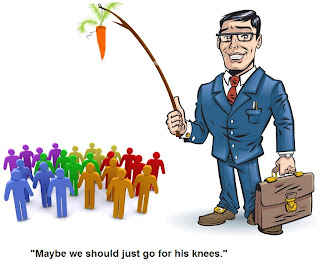
Disillusionment has struck many Americans, especially younger generations. They no longer have faith in a system that has left them with tens of thousands of dollars of student loan debt with nothing real to show for it. As they went to school, hoping that one day all of their work, money, and time would pay off, they got to see the carrot dangled in front of them inch further and further away. Now, rather than continue to chase the carrot, it seems as though many have decided that it might be a better idea to go after the person holding the carrot, thus Occupy Wall Street. I hope that OWS continues to grow, that it continues to garner attention, and that it eventually leads to some sort of large shift in the American Dream.

Thursday, October 6, 2011

Sympathy for the Rebel: Translating Grassroots Tactics into Mainstream Success

I was talking with someone today about the Occupy Wall Street movement, as well as the Occupy Chico group. We touched on several different points, but I felt like the most interesting part of the discussion centered around the outsider perception of the movement.

My own experience has been relatively limited to some sympathetic news coverage about OWS, and some overheard conversations between members of the Occupy Chico movement. I don't really consider myself a part of the movement. I haven't participated in any of their events or anything, although I did help put together a flier for them. Because of all of this, I think my perception could be categorized as that of an outsider.

I agree with a great deal of what I've seen so far, such as the call for things like universal healthcare, improving the education system, more environmentally friendly practices, criminal justice reform, among other things,. I think many people agree with a lot of the grievances that have been voiced by members of this movement.

I do think, however, that members of this movement need to be cognizant of the fact that some of their demands and practices may alienate potential sympathizers. This is what I touched on in my conversation earlier. One of the specific issues is the Guy Fawkes masks (the V for Vendetta Mask) that people have been wearing. I can understand the sentiment--the oppressed rising up against the system--to a point, but ultimately that guy was a terrorist. He planned to blow up Parliament. Movement members should stick with non-violent revolutionaries like MLK or Ghandi; people who didn't want to kill scores of people to get their way.

We also talked about the structure of OWS groups. Generally, from what I've seen, these groups have been working under systems of consensus voting. This super direct democracy is great, to a point. There's the obvious problem of making such a system feasible for a population of 300+ million Americans, but there's also a more pressing problem for the OWS movement. Consensus voting can be slow, very slow.

The groups that the OWS movement are pushing against don't operate under that system. I suspect for the most part that they'll have have some sort of hierarchical system (Board of directors, CEO, etc.). This sort of structure, while not as democratic as what OWS is doing, is certainly better for executing quick, wide reaching decisions. If the company I work for wants to do something I disapprove of, which it certainly has, I have virtually no say. While that sucks for me, and is terribly undemocratic, it works well to make sure decisions are made quickly. If a corporation or an opposing group to OWS does something to hinder OWS, consensus voting is likely to be far too slow to create an effective response. The flip side of that is not true. A top-down system will be able to quickly respond to any changes or challenges thrown its way.

Another point we touched on was about effecting change. My view of OWS is that it doesn't want to work within the current institutions to create the change it wants to see. Heck, the most recent poll done had congress with an 18% approval rating. I get that--our current system of governance is terribly ineffective at getting legislation passed. I can understand the desire for a new system that is more responsive to the needs of average people, but I think that such a change is not realistic.

Now, I can hear the yells about being "realistic" and how social movements in the past weren't being realistic at the time, but I feel like they were, in at least some way, being realistic. Calling for the abolition of our current form of government is sort of a big deal. The civil rights movement, women's suffrage, just to name a few, may have all been deemed "unrealistic" at the time, but they all worked within the existing framework to achieve their ends. Women vote because the constitution was amended, minorities have (mostly) the same rights as everyone else because of legislation that was passed as well as SCOTUS rulings. And these movements had very clear goals.

The Tea Party, which I've heard the OWS being compared to over recent days, did work within the current confines of existing institutions. They were mad over a list of ambiguous subjects including, big government, runaway spending, debt, and they let everyone know they were mad. But they didn't stop there. They mobilized, they got their candidates on the ticket, they went out and voted in 2010, and now the House is, unfortunately, paralyzed by their efforts; but that's sort of what they wanted, to grind government's "growth" to a sudden halt. I know that some people may say that the Tea Party wasn't really an organic movement and was really just a bunch of rich people getting underlings to do their bidding, and they may be right. But that doesn't really matter. There are groups sympathetic to OWS that could help to fund wide calls to action and get the vote out in 2012 for candidates that OWS put on the ticket.

Anyways, my stream of thought is now over.

TL;DR version: Remember OWS folks, try not to alienate people, don't idolize terrorists, don't ask for too much, try and effect change in the current institutions, and ... yeah.

Wednesday, October 5, 2011

Paperwork and Protests

Wonkblog has an interesting article today by Rich Yeselson, a research coordinator at Change to Win, outlining some of the common habits that successful social movements employ. It's a very worthwhile read.

One of the points that Yeselson emphasized was the fact that successful social movements are boring. That's not to say that their message or their cause is boring, but rather that the legwork associated with the movement is. That means creating fliers, making phone calls, writing letters, gathering signatures, that sort of thing. Sure, it's a lot more fun and empowering to go march downtown, or participate in a protest, but those aren't necessarily the most important aspects of a social movement. Behind any large or successful protests are volunteers participating in countless meetings, making phone calls, writing e-mails ... the boring stuff.

At the CPJC I mostly do the legwork. I create fliers, I answer phones, I send out e-mails, I update the database. None of it is terribly exciting for most people (I do, however, enjoy it), but according to Rich Yeselson, what I have been doing is terribly important.